Florida Golfer Guide blog
Is It Better to Walk or Use a Cart?
How far you walk in a round, what walking does for your game and your wallet, and when riding a cart makes more sense.
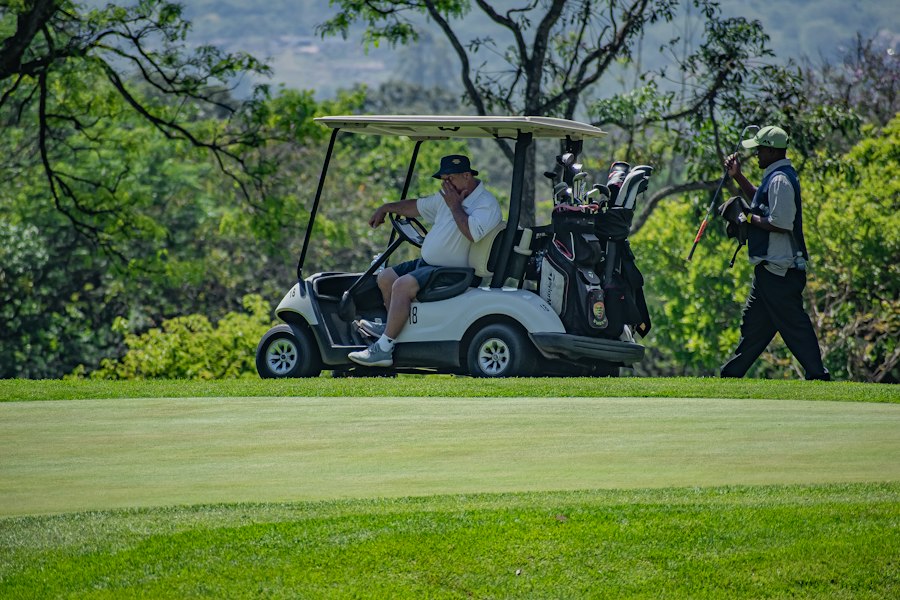
Bring this up in any clubhouse and you'll start an argument. Some golfers wouldn't think of walking 18 holes. Others believe a cart takes something out of the game and won't ride unless they have to. Plenty of people land in between, walking when the weather and their knees cooperate and riding when they don't.
There's no single right answer. It comes down to your health, your fitness, the course in front of you, the weather and what you want out of the round.
Golf started on foot
For most of the game's history, walking was the only way to get around a golf course. Carts came much later, and course design changed with them. Many newer layouts, especially the ones built inside residential communities, put a long stretch of road or houses between a green and the next tee. On a course like that, a cart isn't lazy. It's how the place was meant to be played.
How far you walk in 18 holes
Start with the scorecard. A course that plays 7,000 yards from the back tees works out to a little under four miles of holes, measured tee to green. The actual walk is longer, because you also cover the distance from each green to the next tee and you rarely head to your ball in a straight line. Forward tees cut the distance down. Put it all together and most rounds come to about three to six miles on foot, depending on the layout.
Terrain matters as much as distance. Four miles on a hilly course feels much longer than four miles on a flat one. A lot of Florida golf is fairly flat, which helps, but summer heat and humidity more than make up for it.
Carry the bag or push a cart
If your back is healthy and you're in decent shape, carrying a light stand bag is fine. If you don't exercise much, or your back complains after a long day, use a push cart. You'll get nearly all the benefits of walking without a strap digging into your shoulder for four hours.
Push carts vary a lot. Some have three wheels and some have two. Some fold flat enough to slide into a small trunk and some don't. Look at the brake, the handle height, where the scorecard and your drink go and how heavy the thing is to lift. Try a few in the shop before you buy.
Walking and pace of play
Walking usually doesn't add much time. A walker heads straight to the ball and gets ready on the way. Riders often drop one player, drive across to the other ball and wait. On cart-path-only days, after heavy rain for instance, riding can be the slower option, since everyone shuttles back and forth between the path and their ball.
How long 18 holes takes depends far more on other things: how many players are in your group, how crowded the course is, how the holes are routed and how quickly everyone plays.
Why walking is worth a try
It's real exercise
Several miles on foot, plus every swing and every trip down into a bunker, adds up to a genuine workout. It beats an afternoon on the couch for keeping the weight off, and you're outside doing something you enjoy.
It costs less
Cart fees pile up fast if you play a couple of times a week. Walk instead and within a few months the savings could cover a rangefinder or a launch monitor. You don't have to go all or nothing, either. Where the course allows it, walk the front nine and ride the back, or the other way around.
You always have the right club
On cart-path-only days, riders park on the path, guess at the yardage, grab two or three clubs and trek across the fairway. Guess wrong and you're either hitting the wrong club or walking back for another. When your bag is with you, every club is right there.
You stay loose
Riding gets you to the ball quickly, and then you sit and wait for the rest of the group. A few minutes of sitting between every shot is how backs tighten up. Walking keeps your muscles warm, and you can stretch while you wait on a tee.
You keep a rhythm
Walkers settle into a steady pace between shots and arrive at the ball ready to play. There's less stop and start, less rushing and less dead time. That evenness tends to carry into the swing, and steady golfers are consistent golfers.
The company is better
Two carts split a foursome in half. On foot, you walk up the fairway together, trade stories and needle each other about that missed putt. If you play with your husband or wife, walking a round side by side is one of the nicer ways to spend a morning.
You actually see the course
The game was built to be walked, and you notice more at walking speed: the way a fairway tilts, the wind moving through the pines, the herons and the occasional gator sunning on a bank. From a cart, most of that goes by in a blur.
When riding makes sense
There are good reasons to take a cart. Health problems, a sore knee or hip, or recovery from an injury are the obvious ones. Some courses are simply too spread out to walk comfortably, and some limit walking at busy times. And in a Florida summer, a midday round on foot is too much for almost anyone. If that's the only time you can play, ride and drink plenty of water, or check when Florida golf is most comfortable and move your tee time.
How to start walking
Don't jump straight into 18 holes in the middle of summer. Walk nine first and see how you feel. Get a decent pair of golf shoes, because your feet will tell you about cheap ones by the turn. Pick up a light stand bag or a push cart, bring water and a snack and loosen up a little while you wait on tees. Swinging a club for a few hours while carrying or pushing a bag is more work than it sounds, so build up to the full round.
And if you end up walking some days and riding on others, that's fine. Nobody's handing out medals for either one.
Find a course for your next round
Nine Florida regions, each with its course list and the clubs worth a trip.
New articles go out in the newsletter. Spot an error or have a question? Contact us. Golf businesses can advertise with us.